
How City, St. George Iranian Student Truly feel about the recent death of Iran’s Supreme Leader Ali Khamenei
Carrot Magazine had the opportunity to speak with an Iranian-born first-year student to discuss her perspective on the ongoing war. For her confidentiality and safety, we will refer to the student as Sara.
This is what she told us.
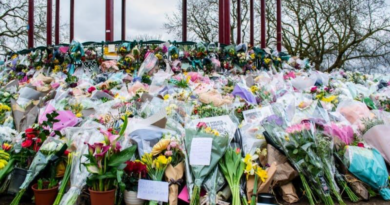
On an international scale, hundreds and thousands of diaspora Iranians on the streets of New York, London, Paris, celebrated the death of the Supreme Leader. Some people expressed their support of the intervention, while others, like Sara, do not support the intervention, yet celebrated his death because to them, he was “the head of this dictatorship, a symbol of oppression who had suppressed, tortured, and killed millions of Iranians over the years”.
“Iranians are patriotic people, but we are split down the middle between those who support and don’t support the Islamic Republic”, – explains Sara.
According to the US-based Human Rights Activists News Agency, there are confirmed 5,459 deaths, and they are actively investigating 17,031 more (Time Magazine). Many sources could not accurately confirm the figures impartially due to the internet blackout imposed by Iranian authorities. The Health Ministry’s two-day figure shares that the total death tally stood at 30, 304 on January 25, according to Dr Amir Parasta.
Sara recalls the struggle of living in Tehran before her family sought political asylum 8 years ago. In the decades since the 1979 Islamic Revolution, the weight of the global economic sanctions has remained a constant reality for many Iranian families.
“My parents could not wait and needed to flee. They wanted to ensure a better future for me as a women growing up in Iran and the political unrest” Sara explains.
Moderates vs. Conservatives
Not only were Iranians affected economically, but some were also against what the Islamic Republic stood for.
“I remember my cousin telling me about his participation in the Iranian green movement in 2009 and witnessing the White Wednesday in 2017”.
The Green Movement was one of the largest protests in the Islamic Republic since the 1978 Revolution. It was ignited from the 2009 presidential election.
The response? Brutal and violent government crackdown using the IRGC and Basij militia (BBC). According to Human Rights Watch, “basic human rights protection in Iran has deteriorated to new lows” For example, the number of executions under Ahmadinejad’s first presidency increased by three times.
I was 11 when they arrested me for not wearing a head scarf
White Wednesday was a campaign launched in May 2017 by activist Masih Alinejad. Iranian women took to social media and the streets to protest mandatory hijab laws. But the level of acceptance women face for not wearing a hijab is still in question. Mahsa Amini, a Kurdish-Iranian woman, suspiciously died in Tehran after the Police Command of the Islamic Republic of Iran claimed she had fallen and passed away. Although key eyewitnesses and the UN mission reported that there is extensive evidence to suggest she died as a result of a beating, according to the BBC.
What Happened on 28 February
11 days into the holiest celebrations in Islam. Ali Khamenei was killed by a joint military operation by the US-Israel Armed Forces after 37 years as Supreme Leader. According to sources gathered by Jerusalem Post, IDF intelligence, Mossad, and the CIA collectively shared intelligence for months before executing their strategic surprise attack against the Iranian Government.
Ali Khamenei led Iran after succeeding the founder of the Islamic Republic of Iran, Ayatollah Khomeini, who overthrew the Shah’s monarchy in 1979.
The death of this leader has sparked immense controversy, especially regarding the actions of those exact powers that used to be allies with Iran during the Shah’s monarchy.
Mixed Response
The responses were mixed; however, many showed support for the assassination. Large crowds took to the streets of Tehran and other cities, dancing and cheering every night after the IRGC [Islamic Revolutionary Guard Corps] confirmed the death of its Supreme Leader.
The diaspora of Iranian students in London took to the streets, proudly waving the former Lion and Sun Iranian flag, representing a return to a country that once symbolised unity beyond modern political divides.
“Other students and I were rallying in front of the Iranian embassy when, suddenly, someone screamed— ‘Khamenei is dead!’ There was a moment of silence. It was chaotic as we all scrambled to confirm if the news was true. The next thing I knew, everyone—family, friends, and even strangers—was weeping with joy. It was a shared relief for all of us who had been affected by his actions—people who had been forced to leave Iran, who had lost loved ones, or who had survived arrest and torture.” — Sara, reflecting on the day the news broke.
On the contrary, social media posts show Iranians protesting on the streets, mourning the loss of their late leader. International support of other people abroad protests on the streets to condemn the US and Israel for “intervening” and argue that an illegal war was started and is unjust.
I felt relieved, a glimpse of hope, but the Iranian people do not deserve to go into war
Addressing the Elephant in the Room
The question lies, however, why was there less international support for the Iranians when the regime had killed over 30,000 plus Iranians during the blackout? Where were the human rights advocates who were on the streets chanting for the Palestinian people at the Iranian protests against the regime?
This caused immense frustration from Iranians who feel that Palestinian supporters were “performative” and did not actually care about the “human rights” cause. If so, why are many of the Palestinian supporters on the streets condemning the assassination of a leader who oppressed and killed its own people?
Adding to the complexity of the demonstrations, the 12 February “Zionism off our campus” protest, organised by the former affiliated society City Action for Palestine (CAFP), saw several people carrying the flag of the Islamic Republic of Iran. Other societies, such as the City Ahlulbayt Society (ABSOC), openly expressed their grief following the death of Khamenei, portraying him as a respected martyr.
In response, Sara reached out to both CAFP and ABSOC to question their display of the Islamic Republic’s flag. She challenged their support for the regime, citing the government’s recent violent crackdowns on its own citizens.
Carrot Magazine reached out to the City Ahlulbayt
Society and received no comment.